Monday, July 20, 2015

Some Things Considered...

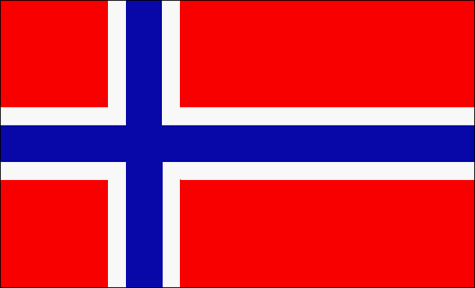
'Tis the season to get politically active in the United States. While our news feeds fill with political promise and scandal alike, here are a few thoughts to consider about immigration from a Norwegian perspective.
Before moving on, there are a few things to point out. Comparing the American and Norwegian immigration and citizenship services, keep these three things in mind:

  1. Size Matters. Immigration to the United States is of a very different scale than immigration to Norway. The USA immigrants population reached 41.3 million in 2013; as of January 2015, Norway's total immigrant population reached 804,963 migrants.
  2. But, different-different, same-same. Correcting for total population size, Norway and the USA are much more similar than they are different. Of Norway's nearly 5.5 million residents, 15.6% are immigrants. By comparison, immigrants comprise only 13.1% of the total US population.
  3. Immigration is not homogeneous. Labor migrants, refugees, asylum seekers, and family reunification account for most migration to the United States and Norway. In Norway refugees and asylum seekers account for the majority of migrants. In the USA labor migrants remain the most significant migrant group.
* * *

Visiting the Directorate of Immigration and Diversity (IMDi), I learned that the Norwegian immigration system has been crafted toward a vision of employment and integration. During the 1990s, failed efforts to integrate immigrants to Norway (mostly refugees) into the work force threatened to create an immigrant underclass. That would undermine Norway's efforts to have full employment, posing serious challenges of crime, overburdened welfare services, and declining social cohesion. The response was the creation of the Introductory Program in 2003.

The Introductory Program has one goal: to get migrants working. It accomplishes this through financial and educational components. Migrants are introduced to Norwegian bureaucracy and work life through the receipt of "wages" for daily participation in the program. Migrants are also trained in Norwegian language and culture, and they receive individual advisement. It is important to note that such benefits are only available to Norwegian refugees and asylum seekers; there is no state introductory program for labor migrants.

All such programs are implemented at the municipal level with state funding.

* * *

TLDR:

I don't assert that "we should do what they're doing in Norway," or that there is any right answer when it comes to immigration in the United States. But when the American immigration agency's citizenship checklist (here) looks like a list of eligibility requirements for a charity scholarship, I think it's safe to say things are getting a little too far off-base for my liking. What I want to see in this country is a vision executed consistently and accurately--just like the Norwegian system.

We cannot, at the same time, tote around the American dream and make it highly restrictive and inaccessible. Just as Norway has done, we must decide a balance between rights and responsibilities of future-Americans who enter this country filled with aspirations of a better life.  


Thursday, July 16, 2015

Sometimes Goodwill Is Expensive

When I was young I lived with the idea of my innocence; that is to say, with no idea at all. I'm not the self-tormenting kind of person, and I made a suitable start in life. I brought off everything I set my hand to, I moved at ease in the field of the intellect, I got on excellently with women, and if I had occasional qualms, they passed as lightly as they came. Then one day I started thinking." (Albert Camus, The Plague)
I condemned myself to dancing in Bergen's notorious night life only to come to a full stop. I frantically scraped pen against napkin before the thought left my head. You know, it's a dangerous thing, thinking. I wouldn't blame you for stopping here to preserve a calmer way of looking at things.

Or perhaps you may read and decide not to think about it. Regardless, the choice to read is yours; and the responsibility is mine to write.

* * *

My mission in Oslo is to understand goodwill. What does it mean to be nice to one another? What is peace? The International Summer School seems to be a perfect place to accomplish this task. Our concepts of peace often regard overcoming the tensions inherent to the congress of nations, so if diverse students may cooperate, the world can too. So goes the concept.

Do not misunderstand me. No palpable tensions exist among us at the ISS. Peace would reign supreme here were it not for our unfortunate inheritance. We have not achieved peace.

* * *

In the city of peace I have learned--above all-- one lesson from the example of such leaders as Malala Yousafzai, Kailash Satyarthi, Jimmy Carter, and Martin Luther King, Jr. It is this: peace is positive and negative. Peace is as much the presence of goodwill as it is the absence of disdain. Peace is as much the presence of compassion as it is the absence of hatred and violence. I repeat we have not achieved peace.

* * *

We have not achieved peace because we have chosen to inherit a system of self-organization which rejects it. Self-organization as sovereign nation-states has ensured greater negative peace (the absence of conflict, should we respect the norm of sovereignty). It has also divided us, the international society, into groups disinterested and apathetic to the cause of compassion and goodwill. I have learned this lesson from the students at the ISS--myself included.

Since meeting each other as international equals with a common identity as students enrolled at ISS, we have devolved into convenient relations. We have prioritized nationality, language, shared interests, and other qualified criteria over the sustenance of a relevant and legitimate single identity. The mutual construction of identities implies the simultaneous creation of organized groups and loyalties. Those loyalties prioritize socialization and inclusion for others who identify with the organized group. That's to be expected, and it should be noted that inclusion does not necessitate exclusion.

Yet there are those who are excluded. They are regarded as independents or lone wolves. How did this happen?

Simply and shockingly, a process of prioritization and loyalty makes it extraordinarily tempting to discriminate. Forming new identities makes differential treatment something valuable and easy to do. We afford ourselves the chance to forget about others simply by making them 'others.' Neglecting a responsibility to ensure social cohesion presents a challenge for peaceful relations.

A shattered mosaic of social identities (in-groups and out-groups) breeds stereotyping, ethnocentrism, pride, and disdain. These attributes are systemic, but they are also attributes which we may choose to reject. The problem is that they make positive peace something quite difficult to achieve.

Here is the place for goodwill and compassion. Recognizing the nature of identity as socially constructed lets us choose to overcome its temptations. We have the opportunity to decide that diversity isn't a legitimate reason not to talk with someone, not to trust someone. We recognize the ever-inclusive human identity and a loyalty to ensure no individual is excluded--purposefully or not. Such is the cause for peace in our time. It is a cry to institute dialogue, teach diplomacy, and foster goodwill among all. It is a call to know one another.

Or at least to pay attention when someone is sitting alone at the lunch table surrounded by distracted voices.


Friday, July 3, 2015

Red, White, & Blue

In honor of Independence Day I'm lightening up this blog with some pics and sweeter content. Naturally this means food, food, food, and in Norway that usually means fish. But not today. Dessert is on the menu along with the enigmatic popularity of TGI Friday's. Let's get straight to the pics.

(L-R) Rømmegrøt, strawberries, and a street shot from downtown Oslo.
Rømmegrøt: imagine a world where gravy is sweet, where it has a Greek yogurt twang not unlike a Spanish guitarist plucking your tastebuds rhythmically. Boom, a cloud of cinnamon-sugar redefines "Pompeii," and that soothing, salty lake of butter says, "Hei. Velkommen." Norwegians know their porridge, and what an epicurean overload to taste the simplicity of boiled milk, flour, and sour cream.

Norwegian Strawberries: it's what you get when you combine a flash-pan growing season with midnight sun in a country where 3% of the land is arable. These flavorful treats make us consider the true meaning of the phrase "from concentrate." These are the original Gushers, and if you can get 'em eat 'em as soon as you can. They go quickly, but occasionally you'll find a few in the forest looking back at you wildly. Must eat with blocks of velvety vanilla ice cream.

Finally, in honor of my brother Joseph who is the biggest fan of Guy Fieri's culinary expertise, "Holy guacamole look at that patio!" For some reason every TGIF in Oslo (yeah, there's multiple) has lines that make them wanna "shut the front door." For an American trying to discover his identity abroad, it's more than a curiosity. But for the average Norwegian, dining out is not in the daily routine. With prices this big, it's no wonder why Guy's surprise portions and over-the-top cheese combos might attract a better bang for your kroner. Still, whether you're a fan or not, two TGIFs in three blocks in Oslo is like seeing mackerel and tomato sauce at a Ruby Tuesday. Strange, but intriguing...

Some other culinary delicacies here in Norway have been cured lamb, brown cheese (caramel heaven), and the humble popularity of packing your lunch. In any case, a happy Fourth of July to everyone stateside. More to come, more to come.


Wednesday, July 1, 2015

Welfare: Norwegian Models

If you expected this post to be tall, blond, and fit... well, we'll examine the Norwegian welfare state nonetheless. It doesn't sound quite as sexy, but I assure you I will try to spice things up-- give you as much as I've learned, so you can, too. If it's still not up to expectations, well... imagination is a wonderful thing.

Unpacking the Norwegian welfare model is daunting, and I'll admit I'm inexact. Still, when it comes to Norway and the evolution of social welfare, a few things are important to keep in mind. Here's what you need to know:
  1. Social welfare has a long history in Norway, but it really took off after World War II when there was great need and democratic political will to enact it.
  2. Universal welfare models pre-date the Norwegian oil-boom. The world's largest sovereign wealth fund does not fund the world's most notorious social welfare regime. Individual tax contributions do.
  3. There is political consensus on universal welfare. There is no debate in Norwegian politics (from far Left to far Right) on the existence of social welfare. There is much debate on its inclusiveness and the degree to which welfare services are privatized.
  4. Norway's welfare model is based on universal rights. This means that all Norwegians are recognized as eligible for state assistance--whether that's unemployment benefits, pension, health care, etc. Some policies are targeted, but the majority are universal.
The biggest curiosity of the Norwegian welfare state is this: why would rational citizens agree to be taxed more to fund a system of universal social welfare? The answer is more complex than I can imagine, but the takeaway is the ideological difference between American and Norwegian welfare models.

* * *

Norwegian welfare is all about increasing personal freedom (I know right?). Equality of all isn't the point-- which distinguishes these policies from far-Left, Communist ideals. Individual freedom to decide destiny (pursue happiness) is the goal of social welfare. The policies exist to liberate individuals from socially-imposed constraints and obstacles. Imagine if you could actually be anything you want to be-- with no concern for "that makes too little" or "people like me just don't do that." Such is the basic principle at work in the Norwegian context (as I understand it). Not much different from the USA, right? Locus of responsibility accounts for all the difference.

American and Norwegian models of social welfare both recognize risk in the pursuit of happiness. Sometimes things just don't work out. But the Norwegian model distinguishes between two types of risk: private and collective.

Private risk measures variation in what we are responsible for as individuals. Things like working hard, taking the job, arriving on time, packing the lunch, etc. If I fail because I fail to be responsible for one or many of these things, it is more justifiably "my fault" that I'm in the situation I'm in, and I should bear the cost. But, contrary to the US model, not all risk is private.

Sometimes social institutions bigger than individuals can affect the individual pursuit of happiness. Variation in achieving what makes us happy can be due to things we can't change, like our race, gender, ethnicity, educational opportunities, etc. It can also be due to economic cycles which are surely beyond our responsibility. The Norwegian model is sensitive to such risk factors, and it is a system which has democratically decided that the individual should not bear the cost of collective, social irresponsibility.

Combating collective risk in the pursuit of happiness is achieved by bestowing universal, civil and political rights. These rights set a standard (for the financiers, diversifies the collective risk through investments in universal healthcare, education, employment, etc.). Rigorous definitions of rights and individual responsibilities demarcates the expectations and benefits of being Norwegian. That is the central concept of Norwegian social welfare.

*Aside*: measuring success of social welfare is simple. First, Norway measures if people are pursuing their destiny (e.g. employment). Second, Norway measures if the collective risk is fully diversified (e.g. inequality). To clarify, the goal is not full equality, but to eliminate as many factors as contribute to stifling individual freedom.


Friday, June 26, 2015

Welfare: Average America?

Talking about social welfare is serious, influential, and taboo in the American context. Doling government entitlements seems to go against Puritan, anti-tax leanings that cut across the aisle. To struggle and to fail indicates an individual moral ill, whereas profitability is divine providence. And to entitle a group to receive social welfare is to assert they are somehow more than deserving--a controversial charity case of public concern which is unmerited given the failure of individuals to provide for themselves.
Do you agree? I want to avoid normative assertions in this post. I don't want to imply that certain concepts of social welfare are better or worse. That might sound weak and indecisive, but I promise it's so I don't exclude anyone from the conversation I hope to have.

Whether you're Democrat, Republican, or other, I feel the above statement is a more than apt description of American attitudes toward social welfare--even among welfare recipients. My own concept of social welfare before coming to Norway was one of inequality and unfairness (however justified): welfare recipients are asserted to be incapable of providing for themselves, so they become public burdens for the rest of society which doesn't have so hard a time succeeding. Again, taboo and serious, but I encourage anyone to disagree.

* * *

The American concept of social welfare is rife with sympathy and pity. After studying it, I define sympathy as a sort of "doing unto others as you would have done unto you." Vital here is the dark chasm that separates self and other. There is no solidarity, and though noble, sympathy is often motivated by pity. Pity is a state of personal sadness or distress that is relieved by doing what we feel is "right" (and often times what makes us happy). The emphasis here is on self. The entire experience of sympathetic charity is discussed in terms of "me" ("us") and "them."

At the end of the day, sympathetic charity and goodwill is a great start. It still means something good gets done (however that's defined), but could it also mean it puts a limit on the amount of good we can accomplish? If so, it has to deal with how we--as a society-- think about social welfare.

Targeted welfare programs are good for recipients. For instance, affirmative action indisputably increases minority representation in higher education, and lower-income insurance programs like Medicaid are well-intended, too. But at the end of the day, these targeted programs miss out on a huge opportunity to discuss what it means to be American. Here's why.

Targeted welfare programs qualify general benefits of citizenship. While they're pragmatic to social liberals in the United States, such programs are not empathetic with the groups they benefit. They can qualify the question of civil liberties by implying that "the poor" or "minorities" in some way cannot independently achieve what is a generally-held standard quality of life. Targeted welfare divides the United States into racially- and economically-charged camps of "beneficiaries" and "non-beneficiaries." No matter where you sit, inferiority takes hold in a nation that commits itself to universal equality. Such rights to education, health, and general welfare are secured for some but not all. Or, there is something especially inferior about some that prevents them from providing for themselves in the same way most people do. Some are entitled, some are not; and qualification for entitlement is failure on any number of items for which we expect personal responsibility.

Is this the inclusive, free, and equal America we strive to be? Does this system benefit all concerned? More importantly, is there any better way of alleviating extreme and illegitimate social inequalities without marginalizing individual rights and freedoms? In Part 2, I will share what I've learned from the Norwegian example.


Tuesday, June 23, 2015

Oslo Syndrome


The Sun, Edvard Munch as seen in the University of Oslo Festival hall at opening ceremonies.

I feel like a sleeping child who's awoken to a noise in the middle of the night. Listing all that's happened in the past five days would make for a boring read, so I pray God inspires me to say all it is you expect to hear from me. In the very least, I'll keep it short.

If the Oslo International Summer School were a rap song, the bass dropped at Monday's opening ceremonies. The severity of our setting made me wonder what I've ever done to deserve the treatment and confidence ISS confers to its students. We found ourselves 89 nationalities surrounded by the genius of Munch-- the gravity of the Nobel Peace Prize. We were entrusted with the Oslo city center's finery. More than this, we have been declared stewards of a tradition of academic excellence and goodwill.

Studying Scandinavian politics and the much-divisive Norwegian welfare state is intensive and inspiring, and I cannot wait to share what I have learned-- riddled with analogies. But I cannot help asking: who am I to be here? I am reminded of the selfishness of such a question. I am here because of you, for you, with you; and I intend to make good on the trust with which you've sent me.

Entrance to Festival Hall, City Council Chambers, and Oslo City Hall


Thursday, June 18, 2015

Year in Review

Belated 'Happy Birthday!' to The Pursuit of Happy Meals, started one year ago.
I've caught nostalgia while dusting off this blog for my Norway adventures. But I found it impossible to romanticize McDonald's more than I already do, so I downloaded Picasa. I even googled "Pursuit of Happy Meals" as a narcissistic measure of web-stature. Much to my dismay, I am not alone. Existentially threatened by this more gluttonous McBlog, I want to defend my raison d'etre before leaving the country for some time.

This blog boils down to one inspiration: despite its best efforts to convince us otherwise, McDonald's sells memories--not food. The Dollar Menu features cheap fixes for the nostalgia-junky, the child in us all with a voracious appetite for reliving our McMemories. That's what McDonald's means to me. It's more than just-okay food and spotty service. But McDonald's-- like this blog-- is not unique.

Life is full of those moments when something real makes you dream of heaven. It's like a Rosenquist with dull pieces that don't fit together, and every once in a while it just works. For an instant the colors are vivid, and you smile. And you chase any clues to escape life's labyrinth.

This is a journey on Crete. This is a journey to Norway. This is a taste-ful adventure. This is compassion. This is the Pursuit of Happy Meals.

Friday, June 12, 2015

More Than Acknowledgements


The biggest illusion in life is thinking you're responsible for its marvel and mystery. When life gets interesting, it's easy to claim. Beating your chest in victory makes a lot of noise because the breast you strike is hollow.
^I don't want that. So before I go to Norway, let me summarize the contributions of the people who made this trip possible. I don't intend to seem noble or humble. It's just what's true and fair.

Courtesy Gwinnett Sunrise Rotary Club
Snellville, GA
Rotary has given everything. The Georgia Rotary Student Program drives scholarship, logistics, and hospitality to Norway and back, and Gwinnett Sunrise has shown nothing but good will and support in its recommendation of my participation in this program. If you're unfamiliar with what exactly Rotary does, I posted the Rotary Four-Way Test to give a glimpse. Let me reemphasize the exemplary, servant leadership of the Rotarians at Gwinnett Sunrise and the GSRP in realizing a vision of empathy, peace, and friendship in all communities.

All these attitudes are incarnate in my mom, Angela Wirt. You've sacrificed two sets of Mother's Day, birthday, and anniversary as I've been studying abroad. You always put others before yourself, and "every atom belonging to me, as good belongs to you." All that I am, I am yours. I cherish you, and I am so grateful you encouraged me to apply to this program.

There are countless others whose support I feel and who I will soon meet. These two, right now, deserve the highest praise.

Norway: June 18 - July 31

Courtesy Wikimedia Commons

Thursday, August 14, 2014

Brutal Burger: the Taste of Betrayal

Brutus (filtered a bit)
I now turn my attention to the tastes I've indulged over the past ten weeks, which means I must address the knife wound that has ailed my spine ever since we fled The Hague. My brand loyalty to the McDonald's Corporation is as consistent as the meat on a Big Mac. My loyalty is the subject of ridicule, spectacle, and excuse for why we would ever go to a McDonald's while in Paris of all places. I pride myself on my loyalty, but with a heavy heart I confess that I limp from the Netherlands as Caesar betrayed by the Roman Senate.

The Dutch Royale has spoiled with the aspirations of a tyrant: Burger King.
Cassius

I cannot say I'm surprised, though I'm still trying to calm myself. The likes of that establishment haunt the Holland roads, making the McDonald's a rare breed. I would assume there's just something more palatable to the Dutch people about the 'way' Burger King arranges its flavors in the Netherlands; perhaps it is an enigma better not investigated.

Saving graces
Regardless, the smattering of sesame-crowned bun, brown mustard, crisp lettuce, and quarter patty has the vague aroma and taste of, yes, a Whopper. The bun's texture seals the deal on the tactile dining front: a sponginess and thinness reminiscent of that competitive creation. The patty, I am confident, is the source of gustatory displeasure. The lettuce, fine. The mustard...was delicious. The overall experience: a shocking unveiling of a company that may sacrifice taste to the profit margin, which sat fat at somewhere around $11.89 US.

The fries, I'm happy to report, were fresh, hot, and salted as always. Perhaps they were the only things noncriminal about fast food in this 'city of justice.'

Friday, August 1, 2014

Auschwitz-Birkenau

This blog post omits all pictures taken at Auschwitz-Birkenau. This is to focus on what I believe to be the most important message to take away from Berlin and Krakow as regards the Holocaust, namely that the place, the people, and the propensity to do great evils was nothing unique. The terrors of the Holocaust were the results of popular and private inaction and belief in myths as expressed by the National Socialist party members in Germany. It is therefore not the intent of this blog post to memorialize the place or the actions that took place at Auschwitz-Birkenau via pictures, but rather to explain the reasons and facilitating conditions that led to those events taking place.
As I reflect on my time in Poland, my mind strays and finds itself ruminating over my experience at Auschwitz-Birkenau. I recall the cases of human hair, the mountains of shoes, the torture and gas chambers, and the memories that serve as mementos of the atrocities committed there. I recall these acts, which were evil but executed by un-extraordinary people. I recall the capacity of ordinary men and women to commit great evils against one another. The potential to sin is great because it requires--purely and simply--satisfaction with the status quo: a nondescript interest to do nothing.

When Adolf Hitler came to power in Germany in 1933, it was the result of the paradox of democracy. Certainly, he enjoyed popular support by a populace thirsting for answers and action with a wariness toward skepticism and critical approaches to governance following heavy reparations and economic crisis in Germany. Very simply put, the National Socialist party came to power via democratic processes (namely, elections), but vital democratic values such as acceptance toward opposition, freedom of speech and expression, and freedom of belief were certainly compromised.

It would be foolish to believe that the horrors of the Holocaust cannot be repeated. They have been (especially in the Balkans, Rwanda, Sudan, and other places). Such hostile elements exist--within ourselves and within our societies. We must, therefore, be vigilant so as to hold ourselves and our peers accountable to ethical, legal, and popular standards that attempt to avoid the devolution of mankind into the unchecked revival of the attitudes and actions that led to the death of eleven million people.

Saturday, July 5, 2014

Simple Pleasures

Sometimes life is all about the simple pleasures. Like chocolate. Or diamonds. Here's to both.


Tossed Salad and Scrambled Eggs

I don't know how to put into words those thoughts that have been scattered, smothered, and covered in my hashed-up mind, but nonetheless I'll try to talk about the things that haunt me because I think that it might help scrape them off my plate. Anyways, I have the spirit to write, and--even if my way of writing complicates the message I'm trying to say--I think you'll still get the point.

The point is this: I've grown quite disgruntled with the way we treat one another, and I don't know what in the world to do about it. I have a sneaking suspicion that you might, so I think what'd be best would be to report the instances that have me doubting my faith in humanity. There, you may interpret them.

In Brussels I saw a man kick over a beggar's cup of coins. The man paused, hesitated, and kept on going, leaving the beggar to recollect his estate.

In Athens I saw a man sleeping with his dog near our hotel. Nothing changed about his place within the week we were there.

In The Hague we had the pleasure to observe a trial of accused war criminals from Kenya, one being the Deputy President. We also visited the International Criminal Tribunal for the former Yugoslavia. An accused recalled an instance of 'liquidating' a witness's sons during the war.

Writing them, they sound cliche, these memories. They sound like an attempt to garner sympathy or empathy or compassion without accounting an entire story--like Humans of New York or something. But that misses the point. It seems we are indeed capable of great evils in our lives. Certainly, we may be the victims of the evils of others. But reassessing an axiom of my personal philosophy, are people generally good or evil? How do we become good or evil? Is it genetic? Nurtural? So many memories haunt my response.

And then, one day in Gare Central, I see a woman nonchalantly drop a bag in front of a homeless man. Inside: clothing. Clothing that fits.


Tasting Tradition

The only difference between cooking in a kitchen and baking is the scale...baking is an exact science.
Jean-Jacques at work.
For years I've hesitated to write down any of my 'recipes' for fear of marginalizing them to a slavery of replication. I prefer conceptualizations of flavor rather than cloning taste every time I'm in the kitchen, so for the last year, every time I made something worth remembering I would happily describe the concept of the dish without filling in the details of how it is prepared, leaving those details to be interpolated and interpreted by whoever is trying to reconceptualize it. Essentially, this propagates a novelty about cooking--or an inconsistency that some may find annoying or inutile.

I'm beginning to think the same. And a Belgian bakery has made all the difference.

Boulangerie (and patisserie) De Pauw is a bakery located 15-20 minutes from Brussels center, owned and operated by a man I only know as Jean-Jacques. His family has kept the oven fired since 1927, making his one of few remaining artisanal bakeries in Belgium. While I could tempt you with a vivid description of the baguettes and pistolet crackling after they're raked from the gas oven into baskets reminiscent of the post-Sermon-on-the-Mount, I won't. Pictures--and a video--shall suffice. I will quickly note that the bread production is more or less silent--rare for a kitchen--due to the fact that one of the three-man team is deaf.

Jean-Jacques will retire within the next year, meaning that we had the increasingly rare opportunity to see him work. His day starts at 10:00 PM and gets busiest between 8:00-10:00 AM the following morning as loyal customers enter the storefront. Going to Boulangerie De Pauw has certainly become a tradition for them, one which depends heavily on the consistency of Jean-Jacques work. In simpler terms, Jean-Jacques is a cultural Templar: safeguarding the secrets of his craft, the measurements and techniques which make Belgian cuisine unique. It is heartbreaking to know that in a year, he will no longer be in Uccle keeping that tradition alive.


And I think to our own traditions, those foddered by a fastidious following of the recipes of loved ones. Her barbecue sauce, pie twists, and 'taco recipe' is how I've come to remember my grandmother who passed away in 1969. The same is said for Papa's peanut brittle. And as my grandmother's memory fades with Alzheimer's, it's those Christmas cookies that keep holiday memories alive. We all have these traditions and recipes and memories. Boulangerie De Pauw specializes in sustaining them.

I don't know what to do with this other than to say it. Maybe you know. I would love to hear what it is in the comments below.


Friday, June 20, 2014

Conducive Moments

Today we shared a moment on the train. In our game of avoiding him, the conductor won, and he trapped all of us and stamped our tickets. He did a good job. That made it all the better to surrender. But what made it best was that all we could do was laugh at how badly we had failed.

All the while, we said nothing to one another. That will never change. 

Thursday, June 19, 2014

It's Not Greek...At All.

Last week had us visit Athens, Greece. Per the namesake of this blog, I indulged €5.85 to purchase the signature item at a Greek McDonald's: the Greek Mac™. Since this is my first text-based digestion of a 'Happy Meal,' it's appropriate to make a few notes that will inform future McPosts.

McDonald's does an excellent job with making money. This goal means that the menus from country to country see great variation. A 'core' menu may consist of McNuggets and Big Macs, but every nationality finds items that cater to unique consumer expectations. The Big Mac occupies the top position of every menu I've seen thus far, but what's more interesting is the No. 2 item: the Americanized expression of a unique, national food culture.

The Greek Mac™:
The Greek Mac (TM)


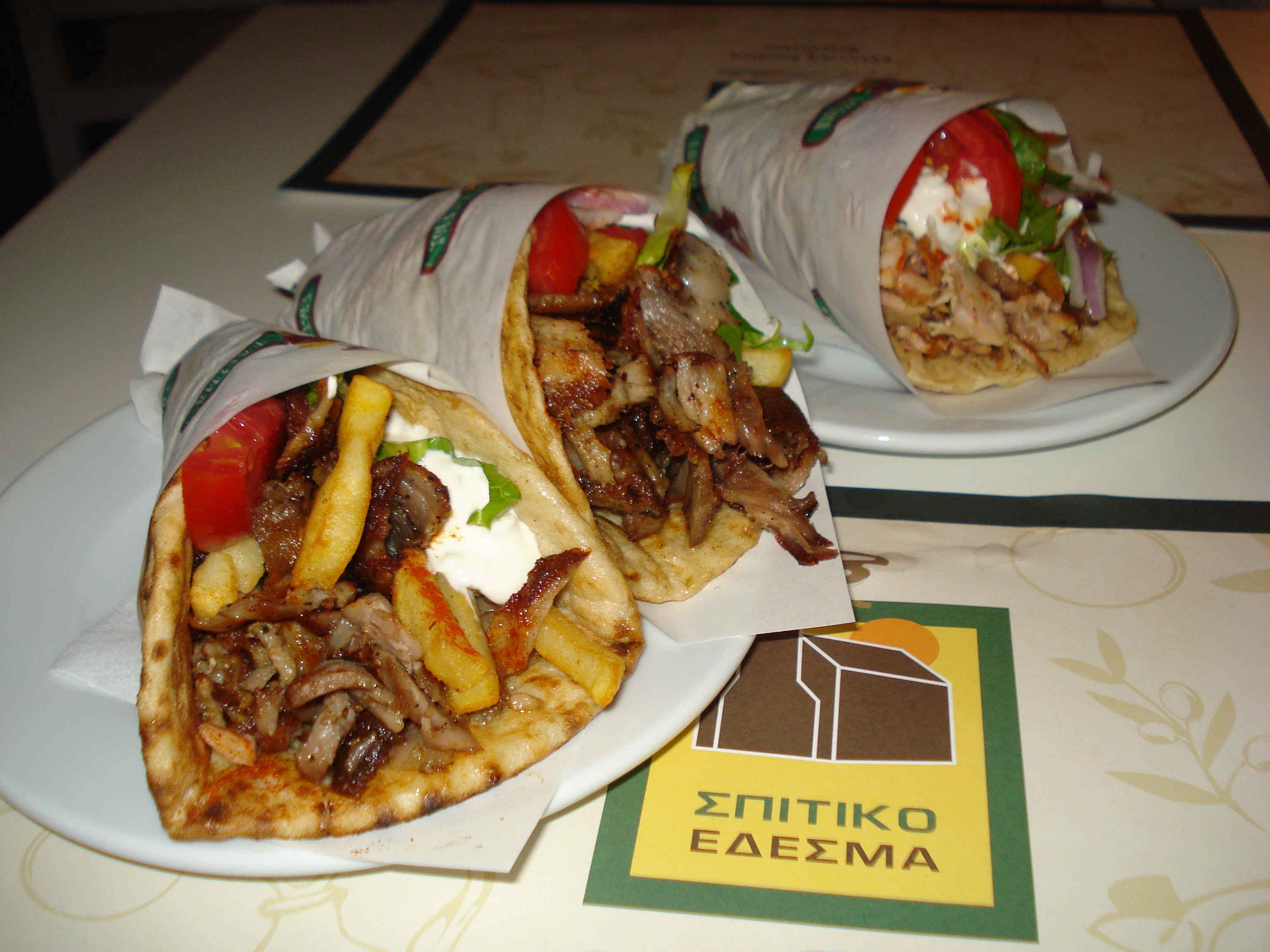
We had the pleasure to meet a man named George, who served us gyros daily for the week we stayed in Athens. In that time we learned well what a gyro meant.  A gyro (pictured) consists of five vital ingredients: (1) warm or toasted pita bread; (2) smeared tzatziki sauce (a yogurt-based, cucumber infused cirrus cloud of gustatory pleasure); (3) carved meat; (4) tomatoes; and (5) onions. While I claim no expertise in Greek cuisine, I will assert that it's nearly impossible to make my mouth water at the sight of a gyro that's been thrown together with garbage ingredients. I mean to say that, like all food, quality matters: not only quality of ingredients, but of preparation and service, too.
Gyros, Courtesy Wikimedia

The Greek Mac is a mangled attempt to commoditize the Greek gyro. The 'pita' is neither fresh nor pita, but rather a focaccia-textured wrap (if I'm being honest, I'd say an herbed version of the Taco Bell Chalupa shell). Next comes the sauce, which tips its hat to the creamy tang of the mayonnaise-based Mac Sauce rather than yogurty tzatziki. Of course the sandwich wouldn't be complete without a couple 10:1 patties reminiscent of its Big Mac namesake. Veggies are there and good.
I should rephrase my earlier judgment. The Greek Mac isn't a mangled attempt to commoditize the Greek gyro. Instead, it's a successful attempt at doing so. I mean to say that the cultural integrity of the menu item has fallen victim to profit-maximizing, liberal economic ideologies. In the end, we get to enjoy something delicious, sure, but what's really Greek about it? My verdict: nothing at all.

Terms and Conditions:

I am, by no means, a purist when it comes to my fast food. I am, however, learning how to approach life through the critical perspective of a social scientist and international affairs scholar. More than that, I am working toward becoming a global citizen. My conclusions here only intend to support the claim that cultural variation exists (McDonald's isn't the same everywhere), and the cultures the corporation caricatures are much more complex than any menu may purport. What is interesting to me is how the menu item came to be and what its features may tell.

Many edits to come, but help me out by asking me questions to clarify my claims, please. Anyone may comment, and it is anonymous.


Explaining the Last Two Weeks

My obstinance encouraged me to ignore the alarm of my memory. My renewed initiative to define and implement a definition of 'compassion' led me, two years prior, to be consumed by it, but remembrance is always short-lived. So, entranced by the possibility of self-understanding and some other moralistic aims, I split the seal to Pandora's box once more. Peering inside, I found the one thing that even the most dastardly of the world's evils have fled: solitude. It is an abyss so deep, a void so insurmountable that I am unsure that even hope remains. If she does, she is most certainly lost.

That is why I have neglected my responsibility to report to you my experiences here. I have been too overwhelmed by a hyperactive mind triggered to sprint with every (senseless) conflation of observation with empathy--empathy with compassion. With my self-inflated crusade to feel, I have forgotten to express those feelings I have come to know. This was the case until I couldn't take a picture of the moon. It wasn't quite the same, so I had to draw it.

I don't mean to say the picture shown is very good. I used off-brand crayons, if that makes a difference. If it does, then you should know I make it a point not to condemn my pieces to be constrained by the value of their inputs. Rather, I expect my art to be consumed, to be valuable in the message it conveys. I would argue that life, unromantically, is art--in the least it's artistic expression. If that's true, then the value of life isn't in whatever you use to sustain it, but rather the message you sustain with it.

This truism is fundamental to my efforts here. Here, with this post, I take a turn from my previous writing. I do not mean to undermine my past assertions. Instead, I mean to improve them. Comments are always welcome. 

Thursday, May 29, 2014

Defining Compassion

Observation begets understanding; understanding begets compassion. So, to find an empathy devoid of pity and relativistic justification, we must become careful observers of the world around us. No thing is too small to feel, to know, or to notice...
...or something to that effect is how I began eighteen months of fastidiously recording every detail of my life. I put the above principle to the test, and I saw results. But along the way, I became fatigued and vulnerable to a loss of understanding. The biggest threat to knowing is to 'know' you know all. This spiritual slump culminated in Tuesday's class, when I flippantly accused a speaker of lacking compassion toward Ukrainians. I maintain that I was right (of course). But my professor's critical analysis of my claim shattered my visage of understanding to reveal that one thing I never really understood at all was 'compassion' itself.

First: Compassion is relevant. As social scientist and professor Caroline Conzelman explains, a true empathy is vital to understand and to predict the consequences of policy and diplomacy. Compassion is what informs German Chancellor Angela Merkel's reaction to Putin's 'madness.' But beyond this, compassion is what elicits our feeling, is an innate and important phenomenon that extends well beyond emotion. As psychologist Daniel Goleman explains, mirror neurons (potentially linked to the phenomenon of altruism and empathy) motivate us to act, making compassion a driving influence in how we behave.

Secondly: Compassion is not pity. The distinction is subtle, but important. As Mother Teresa makes more confusing, "I always tell people that I don't want their leftovers. Our poor don't need your pity...they need your love and compassion."

Thirdly: Compassion is born by sacrifice. It is not enjoyed by giving away the clothes that don't fit you, but by giving away the ones you like most. Compassion is born by sacrifice. This is a point mentioned in Joan Halifax's remarks, specifically that compassion is to pick the maggots from the dog's leg with your tongue, so to not harm the maggots, which have a right to live as much as any other creature. If we bear inconvenience to serve others--even and, perhaps especially, the most marginalized or 'unimportant'--we act from compassion, not pity, not even out of a sense of moralistic duty. And action characterizes compassion.

This should serve as a reference for future blog posts. As I mention the word 'compassion,' I intend this meaning. I encourage review and refutation of my claims in the comments below.


Tuesday, May 27, 2014

The Democratic Illusion

The price good men pay for indifference to public affairs is to be ruled by evil men.
In a climate of the rise of polarized European and American public affairs, it surprises me that the above quote would come from a man not at all affiliated with the Tea Party or UKIP. That Plato recorded this thought so long ago both frightens and enlightens me: the phenomenon of political apathy isn't new, but at least we know one of its outcomes.

The American and European public is increasingly indifferent to politics--that oh-so-corrupt institution that condones lying, cheating, and stealing as a democratic privilege. Voter participation in EU and US Presidential elections has been on the decline for the past forty years, at least. Currently, the EU 2014 elections, which hovered at 43.00% in 2009, shattered that previous record...up to 43.11%. Not a real increase, and a figure certainly inflated by Italian, Luxembourgish, and Belgian legislation making voting mandatory. The United States fares less well, averaging somewhere in the 30-40% range for presidential and midterm elections. This compares to 60-80% peaks during the 19th century. Please excuse my being frank, but what the hell happened?


I can't speak for the American public, but I will confess that I have been indifferent to politics. I have long considered myself above getting mired in the sludge of November campaigns. I have supported that image with my burlesque of Congressional 'ethics.' These are valid criticisms--don't get me wrong--but what's worse is that my disagreement with our 'democratic image' is the primary reason for my lack of political participation. Last election, I didn't vote.

What is the consequence of my not voting, of our indifference? The Tea Party has risen to enchant the American public with partial truths as regards the source of their discontent: immigrants, big government, and corporate limitations. Democrats have promised that same public a false hope of salvation from pressing concerns of unemployment and health care. And in a post-Sunday Europe, the rise of the extreme right may threaten efforts of integration and cooperation among the world's strongest democracies. The consequence of our indifference, indeed, is to be ruled by evil men.

Why in the world are they evil? And, more importantly, what causes our indifference?


Monday, May 26, 2014

Keeping the Faith in NATO

The following is a post originally published on the official GT EU Study Abroad blog. Check it out here! Image also courtesy of that blog.

NATO’s “not our problem” response to the Ukraine crisis discouraged me–a perhaps too idealistic student. Currently, NATO’s political leadership touts alibis derived from legal obligations to collective defense and semantic differences between supporting and defending what seems to be a convenient, democratic identity. The only place NATO’s political arm led me was to the conclusion that ideals don’t matter as much as objective threats. And if the debate had devolved into a “we don’t owe them collective defense” argument, it would be a deeply disturbing exemplar of the alienation of Ukraine, stemming from the tricky nature of its political context.

Politically, NATO is stuck somewhere between Weimar escalation and Chamberlain conciliation, as regards NATO-Russia relations; its lack of political vision has led NATO to settle on suspension of general cooperation and communication as an appropriate response to Russia (notably, Ukraine-related, ambassadorial-level communication is still there). In this regard, NATO has neglected an opportunity to actively address legitimate Russian concerns of NATO’s European dominance and aggressive expansion. NATO has denied an active role in redefining NATO-Russia relations. In doing so, the Ukrainian crisis persists, and complacency among otherwise seized NATO members threatens to leave the issue as unresolved as Cyprus.
SHAPE cast these concerns into the crucible of a structured approach to true problem solving, assuaging my doubts in NATO’s abilities to respond effectively to any crisis. The no-nonsense approach to observing, analyzing, and understanding international relations left no room for legal excuses or marginalization rampant in the North Atlantic Council. SHAPE recognized a limited role of armed force in reaching constructive resolution to the Ukraine crisis, in large part due to Russian ‘escalation dominance.’ It further expressed solidarity with Ukraine while confounded by any means to help with armed force. SHAPE maintains NATO problem solving, even amidst an excuse-driven political milieu. But SHAPE is not the primary NATO decision-maker, and this inspires my concern for NATO’s future relevance.
In the coming decades, NATO will have to address increasingly complicated global issues. It cannot make proactive and constructive decisions without consensus on NATO’s political vision and mission. What does that vision look like? And how do we get there?